
The Migration
The Migratory Wave: A Journey of Hope and Challenge Between the late 19th and early 20th centuries, the United States witnessed an impressive migratory wave from Italy. Driven by a combination of economic, social, and political factors, millions of Italians left their homeland in search of a better life in the New World. This mass exodus, known as the Great Emigration, profoundly shaped both Italian and American society, leaving an indelible mark on the history of both countries.

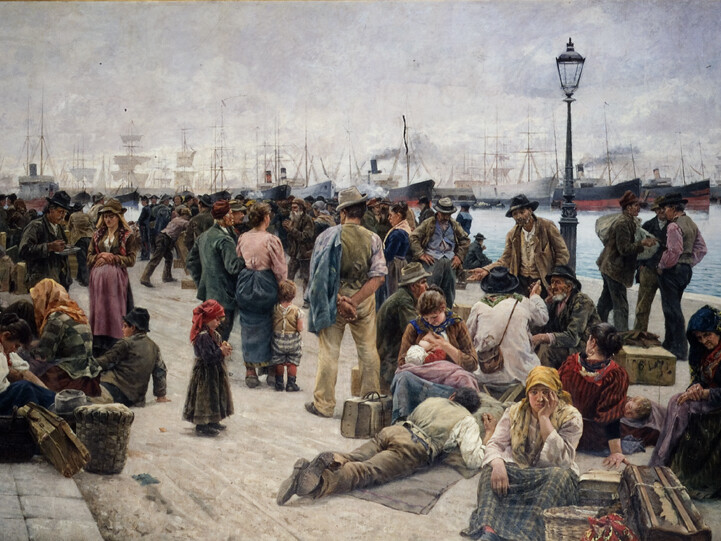
Causes and Origins: The Push to Leave The causes of this massive migration were multiple and complex. Poverty, unemployment, overpopulation, and famines that plagued Italy, particularly the southern regions, pushed many to seek their fortune elsewhere. Added to this were the economic difficulties linked to the transition from agriculture to industry, as well as the social and political tensions that characterized the post-unification period. Most emigrants came from the southern regions of Italy, such as Campania, Sicily, and Calabria, but also from Veneto and Friuli-Venezia Giulia.
Arrival and Treatment: Between Hopes and Discrimination The main ports of arrival in the United States were New York, Boston, and Philadelphia. Ellis Island, in New York Bay, became the symbol of Italian immigration, where millions of people were subjected to medical and bureaucratic checks before being admitted to the country. The treatment reserved for Italian immigrants was often harsh and discriminatory. Considered "foreigners" and "different," they faced prejudice, exploitation, and difficulties in integration. However, despite the adversities, many Italians managed to build a new life and contribute to the economic and cultural development of the United States.